---
title: "LTC Pharmacy at Home: Redefining Independent Pharmacy Growth – Part 2 [Podcast Recap]"
description: Part 2 of our LTC@Home series explores how independent pharmacies can get reimbursed for work they’re already doing, unlock new revenue streams, and carve out a competitive advantage in an aging healthcare landscape.
image: https://info.rxsafe.com/hubfs/Jennifer%20Whalen%2c%20Susan%20Rhodus%2c%20Cole%20Page%2c%20Michael%20Cator%20%26%20Brian%20Glaves%20EP%2002%20-%20Building%20Your%20LTC%20Pharmacy%20at%20Home%20Business.png
---
- [Facebook](https://www.facebook.com/RxSafe)
- [Twitter](https://twitter.com/RxSafe)
- [LinkedIn](https://www.linkedin.com/company-beta/2896335/)
- [YouTube](https://www.youtube.com/user/RxSafe)
- [RSS](https://rxsafe.com/feed)
[](https://reorder.rxsafe.com)
[(877)-797-2332](tel:1-877-797-2332)
[](https://rxsafe.com/)
- [SOLUTIONS](https://rxsafe.com/solutions-2/)
- Pouch Packaging
- [RapidPakRx](https://rxsafe.com/solutions/rapidpakrx/)
- [Vial Filling-Secure Med Storage](https://rxsafe.com/solutions/vial-filling/)
- [RxSafe 1800 w/RWS](https://rxsafe.com/solutions/rxsafe-1800-w-rws-copy/)
- [Blister Card Filling](https://rxsafe.com/solutions/blister-card-filling/)
- [RapidCardRx](https://rxsafe.com/solutions/rapidcardrx/)
- [RapidCardSD](https://rxsafe.com/solutions/rapidcardsd/)
- Pill Counting
- [Eyecon](https://www.eyeconvpc.com/)
- IMPACT
- [Success Stories](https://rxsafe.com/case-studies/)
- [Before & After](https://rxsafe.com/services/installation/)
- [FAQS](https://rxsafe.com/faqs/)
- [Blog](https://info.rxsafe.com/blog/)
- [Videos](https://rxsafe.com/resources/videos/)
- [ABOUT](https://rxsafe.com/about/)
- [Events](https://rxsafe.com/events/)
- [Careers](https://rxsafe.com/about/careers/)
- [Testimonials](https://rxsafe.com/about/testimonials/)
- [CONTACT US](https://rxsafe.com/contact/)
- [Training and Support](https://rxsafe.com/services/training-and-support/)
# LTC Pharmacy at Home: Redefining Independent Pharmacy Growth – Part 2 \[Podcast Recap\]
[independent pharmacy](https://info.rxsafe.com/blog/tag/independent-pharmacy), [Pharmacy Podcast Network](https://info.rxsafe.com/blog/tag/pharmacy-podcast-network), [GeriMed](https://info.rxsafe.com/blog/tag/gerimed), [LTC@Home](https://info.rxsafe.com/blog/tag/ltchome)
Long-term care at home is all about meeting patients where they are and making sure they get the right care at the right time. With the right tools and support, pharmacies can grow their services and make a real difference in their communities while getting reimbursed for the specialized care they provide.
Diving deeper into [LTC@Home](https://info.rxsafe.com/blog/building-your-ltc-pharmacy-at-home-business-part-1), Part 2 of the Pharmacy Podcast Network’s series, “Redefining Independent Pharmacy Growth”, explores how independent pharmacies can get reimbursed for work they’re already doing, unlock new revenue streams, and carve out a competitive advantage in an aging healthcare landscape.
Featured guests were:
- Jennifer Whalen, MBA, Director of Clinical Operations at [Medsense Health](https://www.medsense.health/)
- Susan Rhodus, Senior VP, Contracts and Advocacy at [GeriMed](https://www.gerimedgso.com/)
- Cole Page, VP of Sales at GeriMed
- Brian Glaves, VP of Sales at RxSafe
- Michael Cator, Executive VP of Business Development at [SPS Health](https://spshealth.com/)
*Below are some podcast highlights. The transcript has been edited for clarity and length.*
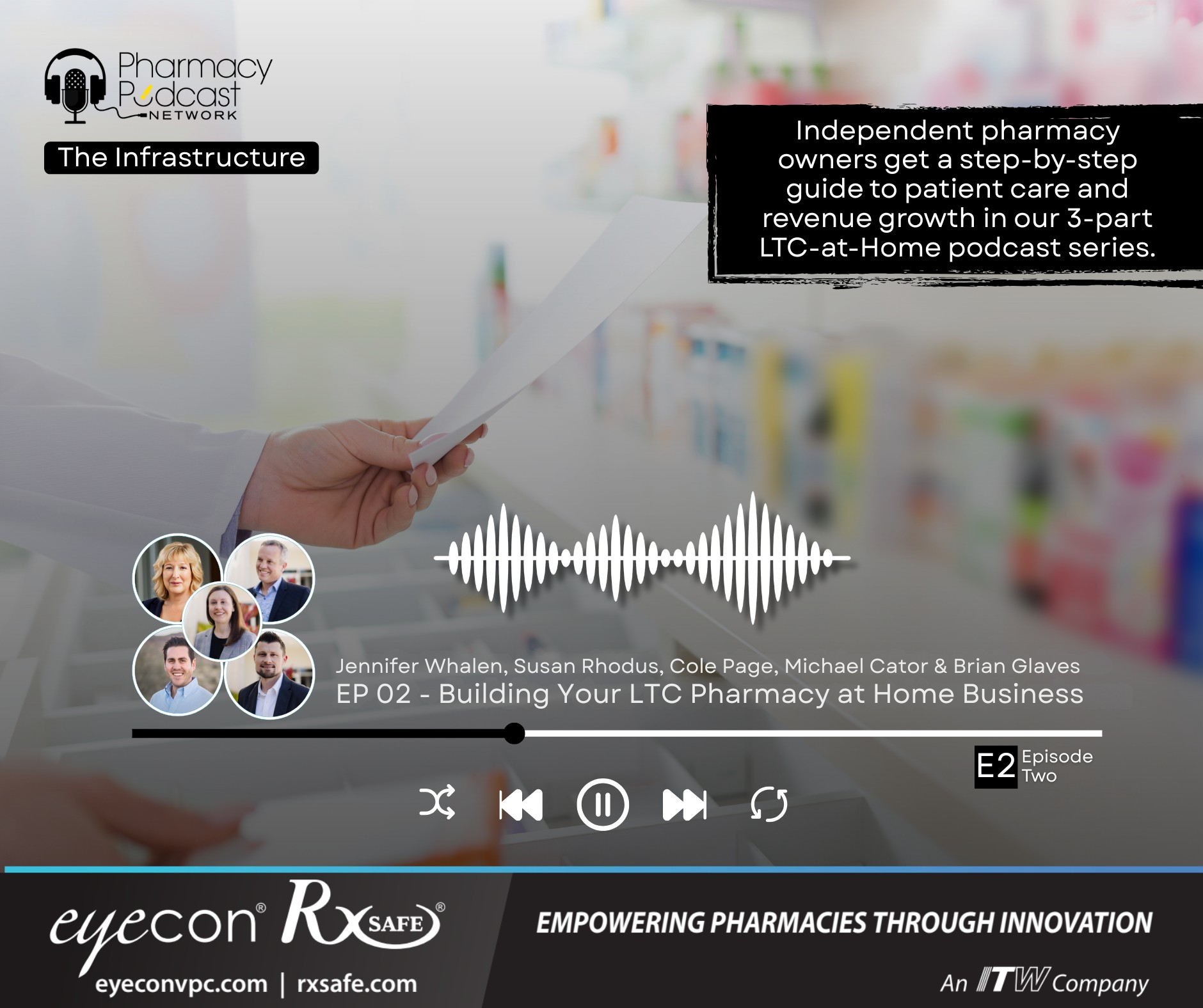
Click on the image below to listen to the podcast
**Todd Eury**: Eyecon RxSafe is a special organization to us because we've learned a lot from them about integration to pharmacy management systems (PMS), the world of packaging the right way, bringing in politics, bringing in the government leadership to really talk about different things in long-term care pharmacy, as well as specialty, as well as our community pharmacy.
We're concentrating on long-term care at home and we're hearing more and more about this. I feel like it's a wave that's going to crash onto the shores of the pharmacy industry and we don't want that wave to come in until you're ready and you can get up on top of it and you can start surfing—profitable surfing, let's call it. And today we're really piecing it together. We're going to make long-term care at home, work for us, work for our independent community pharmacies, and be able to dial into the very specifics. And there are specific parts of this. You almost have to set it up like you're building Legos. And so I want to welcome our special guest today. I'm going to go and we're going to introduce each of them. They're probably not strangers to you if you're listening, if you've been in pharmacy, but I'd like to welcome Brian Glaves first—my co-host in today's recording. And you are with RxSafe and it's good to see you.
### *"...the biggest reason that I think long-term care pharmacy at home is so important is that we're coming up to a tsunami of elderly patients. The most people over the age of 80 will happen in the year 2040, not very far away—15 years from now."*
### *- Susan Rhodus, on the importance of LTC@Home*
**Brian Glaves**: So, I've spent a lot of time in community pharmacy, started with a large diabetes company as my first foray. I was selling diabetes monitors in the pharmacies. I worked with the chains, I worked with the independents, and I spent a lot of time just trying to get my wares out there, spread the message of diabetes. One of the guys that really stuck was Pete Spalitto—Spalitto's Pharmacy based in Independence, Missouri.
And he really took time out to understand my product. He took time to educate his patients and it was one of those things like seeing the numbers—and again, 20 years ago, I'm dating myself, but I saw the impact that he was having on my numbers, but on his patients as well. And I asked him one time, I'm just like, “Pete, explain to me what do you do here?” And he's just like, “Hey, I'm a mom-and-pop pharmacy, times are tough, money's tight. We got to find the best ways to help our patients to run a viable business.”
What I'm excited about—what brought me to RxSafe—was over the holidays, I had this epiphany turning 50 this year. I'm like, I'm not having the same impact I felt like I could have remotely as I did when I was in pharmacy. At the same time, I was spending some time with my in-laws—mid-seventies, they have two or more comorbidities, they take plenty of medicines. They were checking these boxes in my head of my evaluation of RxSafe and they were the definition of long-term care at home.
And it was one of those ... once I saw that, I knew the equipment that RxSafe was doing, I knew what the Eyecon was doing. I knew the compliance packaging. But I think understanding like, “Hey, this isn't a profitability study. This isn't X number of patients, these are people. This is Ross and Euleta. These are my in-laws. They’ve been my in-laws for 24 years now. These are the people that are impacted by this.” So for me, that brought it home of why this is such an important topic is that retail community pharmacies are finding a way to prosper. But secondly, they're helping people like my in-laws. And so, as they got to learn more about this whole program and all the people that make up this program, that's what excited me about coming on here. So that's a long intro talk, but that's what I'm excited to be here and to talk with fellow counterparts on here about.
**Todd Eury**: Brian, I really appreciate that story and it makes me think of my beginnings and how I learned everything from other partners and vendors and pharmacy owners about what's happening. And it's so different 10, 20 years ago. I entered pharmacy 2004 and one of the first people that I talked to about long-term care in community—and nobody said long-term care at home—was Susan Rhodus, and Susan Rhodus is with us here today—she's with GeriMed—and Susan, it's so good to see you.
**Susan Rhodus**: Going off of what Brian said, I mean the biggest reason that I think long-term care pharmacy at home is so important is that we're coming up to a tsunami of elderly patients. The most people over the age of 80 will happen in the year 2040, not very far away—15 years from now. So, we're talking about people who either want to stay at home, don't have the ability to pay to stay at home, and they have to be at home because they don't have the thousands of dollars they need to be in assisted living. They don't have the money to be in a nursing home. That is what the whole world is looking at. And you still have some people out there going, well, I think everybody should be in a facility.
Well, there's not enough room in facilities. There's 1.6 million nursing home beds in the country and they're not building any more nursing homes. You will not find anyone doing that. You have to have a certificate of need. It's just not happening. And so, pharmacies and community pharmacies really can step up to the plate and really be what they need to be.
The gentleman that I worked for, Joe Schutte, who started GeriMed back in 1983, he was an amazing man, did retail pharmacy and went into long-term care pharmacy. He actually took that business over and made it very successful and did a great job of doing that and sold early in the nineties. But he kept GeriMed because he wanted an opportunity to help independent pharmacy stay in business. And that was his whole goal with having GeriMed.
And that's kind of where we're at today, is to really make sure that we can take care of independent pharmacies from a understanding of what they need to be doing if they're doing long-term care pharmacy at home, make sure they have the right contracting and have the right purchasing power that they need in order to be successful in business.
**Todd Eury**: Susan, thank you so much for being here. I'm going to turn it over to introductions with Jennifer Whalen.
**Jennifer Whalen**: Yeah, thank you so much for having me. For me, I work with Medsense Health. Our founder, Matt Tabakin—founder and CEO—is a physician by trade. And when he was going through med school, found had a lot of experience and not great experiences with folks with adherence, right? And the opportunities that are out there with patients, especially elderly patients that struggle with adherence.
So here at Medsense, our goal is really to provide pharmacies, especially these LTC pharmacies, with the opportunity to improve that adherence for your patients. And we know how difficult it can be for pharmacies right now, and everyone's looking to provide additional services. And what Medsense does is provide the ability to improve that adherence while also providing that additional service and being paid for the work that the pharmacy is doing. So, it's one of those things that it goes hand in hand together with LTC at home and being able to provide that service in the pharmacy and then also be reimbursed and be paid for the work that they're doing.
**Todd Eury**: Well, thank you for being here and being a resource for us. Cole Page, Mr. Page, give us your little bit of your background and we're excited to have you here and we hope to learn from your insights.
**Cole Page**: Yeah, Todd, appreciate you having me on today and it's great seeing everybody again. The thing that I love about GeriMed is we are here to help these independents not only survive, but thrive. We do that with a multifaceted approach. And one of those things that we've done is our ComboMed™ program. And, that was started right before I got to GeriMed. And that has been revolutionary for the industry. It's helped a ton of smaller independent pharmacies essentially get reimbursed and paid for the services that they're already providing on a daily basis to these patients.
### *"...the benefit that it has to their bottom line and their profit margins can be substantial...if it wasn't for this our pharmacy probably wouldn't stay open much longer...this is going to give us the ability to pay our bills and actually have a little bit of profit as well, continue servicing the community and then also hopefully grow the number of patients that we're servicing as well.”*
### *- Cole Page, on how GeriMed and LTC@Home helps increase profit for independent pharmacies*
And just like with the LTC at home setting, the biggest thing that we like to tell these pharmacies is “This is out of complete necessity and not convenience for these patients.” And that's where they differentiate themselves compared to let's say, a PillPack. And I definitely think that there are still thousands of pharmacies out there that are taking on the additional overhead, obviously the time for their staff to make sure that these patients are taken care of and adhering to taking their medications. And there's still a ton of people and a ton of independent pharmacies that we can help properly take care of these patients. So, thank you guys for having me on.
**Todd Eury**: Thank you. Thanks for being here, Cole. Michael Cator, welcome to this program. Thank you so much for being part of this podcast. We're looking forward to hearing from you.
**Michael Cator**: Yes, Todd. And thank you for having me. The one I do want to highlight really that's been so effective is StatimRX—one of our solutions that really helps handle that logistics, fulfillment, and scalable backend pharmacy support for these pharmacies. Because as you think of it, the long-term care market or the pharmacy market, it always starts with “You have your patients in an area and then it expands as you grow and it expands. But, how do you continuously get the meds to those patients 24/7, 365?”
And that's where we feel Statim has been able to help support that and be able to check that box to say, “We can get you meds 24 hours a day, seven days a week. We are that provider.” and along again with all the other people on this call, I feel like we have the right solution to be able to go back to the loved ones after maybe servicing them at a facility, whether they were in an ALF or a skilled nursing before and say, “Yeah, we can continue to service your loved one and continue that care and bring that medication management to those patients that are at their facilities—or excuse me—are at their homes, rather than having to have them and reduce the readmittance rates into the hospitals and back in the facilities and be able to have them spend more time with their family and their loved ones. So, I think we have a lot of great solutions here and I'm excited about what we're doing.
**Todd Eury**: Thank you, Michael. So Brian, let's set the stage for our listeners right now. What are the pieces of this puzzle that we really kind of have to think about and where does RxSafe Eyecon fit into this?
**Brian Glaves**: Working at Microsoft, before coming to RxSafe, we had a little product called AI and Copilot that came out and it was taking the knowledge workers and giving them a digital assistant.
At RxSafe and Eyecon, we've got a physical assistant at that point with the Eyecons—and these were out when I was in pharmacy previously—we have thousands of these out there at pharmacies, but it allows the technicians to count 60% faster. It's got barcode verification that goes into it. It has a picture that's taken of every prescription that's filled. So, if Mr. Jones didn't get all of his narcotics, we can show him a picture that says, “Hey, you actually did.”
From a compliance packaging side, we offer robots that can fill single dose packaging, that can fill multi-dose packaging, that can fill in cards or can fill in pouches. And that's something that has helped to automate that process that allows those technicians that are working on these prescriptions in the back on those times when they're not filling the front retail scripts to operate as efficiently as possible. So, what I see it is, is they're a manufacturing facility on the backend. We're letting their people practice as efficiently and as top of the license as possible and giving them the optical verification, all the technology that goes into that. So, when that pharmacist's time gets a chance to validate it, they can see a screen and it's green and red. Hey, red means to look at this. We need to understand what's here. Knowing that we're going to have three optical checks that go into every prescription that's filled, the chances of an error is very slim. And we focus that pharmacist time on verification on the highest potential errors that are there. So, we're setting that work up for them and we're giving them more time to do what they do best.
**Todd Eury**: Susan, give us some guidance here with regards how GeriMed taps in and really helps to bring this to fruition.
**Susan Rhodus**: I think the biggest thing to look at is to make sure that people understand that they have to operate as a long-term care pharmacy in order to participate in a long-term care pharmacy at home prorate. So, they cannot make a decision that they're not going to do 365, 24/7 service to these patients. They have to be able to do that. That's part of the criteria from CMS if they do that. They have to do compliance packaging. And so, some of the things that we've talked about in here are so super important to make sure that they happen. And at the same time, in addition to doing all of those 10 things that CMS has got on their list, and I've only listed a couple of them, you have to make sure that the patient qualifies as well and that the patient is someone, as Cole said, that needs this type of service that they're at an institutional level of care is what they're requiring.
Not someone who—I always use Joe at the golf course in Florida who rides around in his little golf cart and goes golfing every day and he wants his meds to come this way so he doesn't have to go to his local community pharmacy to get his drugs—well, he doesn't qualify. He can drive around in a golf cart, and he can drive around and go get his prescriptions. You don't qualify. I mean, it's pretty easy to look at those type of situations to make sure that you don't do the wrong thing. It's really important that you're taking care of people who have at least three different conditions that they're being treated for, have multiple medications they're taking on a daily basis, have a care that they need to get on a regular on time basis, have ADLs—which is the activities of daily living or IADLs—where there cannot function in at least two of those.
And that includes medication administration, but it's things like toileting, showering, cooking your own meals, going shopping, all of those types of things coming into play for this. So, it's the people who can't go out and do things on their own, they can't leave their home on their own. Maybe they need their loved one or their son or daughter to come and take them to the doctor and they use a walker to do it, that's fine, but they can't be driving around in their car. I had somebody ask me a question one day and said “Mrs. Jones can only occasionally drive” well, occasionally means she can drive. So that's, sorry, that doesn't qualify. So, it's very interesting to hear the questions that you get from people.
And then the other piece that I'll say is, you've got to have more than “Oh, I delivered this prescription, it's a 30 day supply, it's in a compliance packaging.” That's not how this works. You have to do coordination of care and you talked about that. You got to check with all of the prescribers that are prescribing medication and the caregiver or the patient themselves every month. Make sure that you have all the current medications that person's supposed to be getting and that everything is taken care of. We had one of our pharmacies, they called me up and said, “You wouldn't believe this, but I literally found somebody who was trying to take one of their medications, getting it from Walgreens in addition to me delivering it to her inner packaging.” And she said, “I caught it. I'm really so excited that I caught this.” and that's the type of things that people don't think about is that they need to get everything from one pharmacy.
I think we have a lot of problems in this whole country where people are—and rightly so— they're trying to save money, so they get their prescriptions for multiple pharmacies and that's what they're trying to do. But at the same time, they're causing themselves major problems if they have drug interactions or adverse reactions to certain medications and they're going to multiple providers. We've seen people who have four and five different diuretics and they all come from a different physician who doesn't know that the nephrologist, the cardiologist, and the regular PCP are all prescribing the same drug or the same type of drug. So, I think it's really important that people recognize that a big piece of what they're doing with this whole program is coordinating care. And I think that's a big thing that people have to make sure they have the time to do because it is probably the most important piece of this whole puzzle is that that happens so that they can make sure that they get the packaging that they need, they make sure they get the delivery when they need it, they can make sure that they take care of all of these things.
And GeriMed can definitely help with all of those things. In addition to helping with making sure we steer you right and understanding how the payment is going. Still something that we're working on with a lot of these PBMs and talking to them, having talked to their plan sponsors to make sure that they're interested in this and understanding how important it is for them to save money by participating in these programs. And then on the other side, to make sure that even the manufacturers understand that this is an opportunity to really participate and where long-term care is going. It is the future, it's going to be there, and they can make sure that the drugs that are important to these patients that they take all the time are upfront and visible through contracting and understanding how important these pieces are to the whole puzzle.
**Todd Eury**: The difference in shifting from community pharmacy to long-term care pharmacy is an enormous difference. It's literally shifting a gear and doing it the right way and not grinding up the gears of your company and getting into a big issue. So Michael, what is that gear of opportunity? When I hear Susan say, “You’ve got to follow up, you’ve got to contact once a month,” or “You’ve got to reach out to this patient to make sure everything is going okay.” talk to us a little bit about what that means for a community pharmacy who is making the shift to long-term care at home.
**Michael Cator**: And Todd, that's a great point and I kind of started to piggyback off of Susan. You know, long-term care—it's not for everyone. It is a beast. You got to make sure you dot your I's and cross your T's. To think about it from just a logistics standpoint too, we've partnered with a variety of different pharmacies that have really grown and expanded into this model and we've set up things and looked at logistics in a totally different way because when you think about long-term care pharmacy, the traditional one, right? Assisted living, skilled nursing facilities and so on, you got a route you're going to every single day, the same exact stops. This isn't that. This could be a hundred different patients and you're going here one day, here the next day, there another day. So we've set up sweep routes, dynamic routes, we're hitting a greater Boston area, a greater Milwaukee area, and it's not cheap.
You got to have people that want to drive, want to deliver, and they got to get the medication there at the right time, and they got to make sure that it's there on the right day for every single one of their patients. So, working with the pharmacy needs to work to make sure things are optimized perfect, right? In an industry that we say it's already being, it's already tight, right? If you're not optimizing your operations from a logistics standpoint, from an adherence standpoint, from a packaging standpoint, all of those things play into getting that level of care, long-term care pharmacy care, to a patient. And to Susan and Cole's point, that's why we're here. People should be paid for that. If they're going to put that effort in, commit that time and energy and find the solution, they got to be paid the right amount. So, it's important.
**Todd Eury**: I'm thinking of—and what you just said, Michael, in follow-up, and this is where I think Medsense can shine additional light. When Jennifer and I were on a panel, that's exactly what she was saying. She was saying about the stages and the adherence and how serious it was, and it wasn't for everybody. She actually gave a call out to all of the people in the crowd that were listening. They're like, listen, “This is a whole different beast. It's not the same.” Jennifer, kind of expand upon that and what Michael was saying.
**Jennifer Whalen**: Yeah, I think what Michael and Susan both said, if when you get to that spot where you're offering that LTC and you have that LTC patient, then where Medsense comes in, we really call it—and I think Todd and I talked about it—layering the cake a little bit so to speak. And our goal is, that then what Medsense does, is use technology and remote monitoring to really give additional insights and really real time insights into what's going on with an adherence situation with patients, right? And Susan talked a lot about when you're doing LTC, making sure that you're having that check-in, right? You're having that detailed conversation with a patient that's really providing the value. And that's where Medsense provides that background. We provide the adherence. When did the patient take the medication? Is it within the window? Is it outside of the window? Do we start to see adherence missions that maybe identifies, “Hey, something else is going on with that.”
And the great thing about it is right now, CMS reimburses through the Remote Therapeutic Monitoring Program for musculoskeletal and respiratory conditions. And when you're thinking about that LTC patient, most if not many of them have one of those conditions, it's very common with it. So now, the pharmacy has already done the work, they've got your LTC patient, they're doing that monthly check-in call because they have to and they've got it within that compliance packaging. Now, Medsense provides the opportunity to add technology to add the data behind it. And now you're also having a conversation that can be billed through remote therapeutic monitoring. So, another way to be able to be paid for the services that you're providing. And here at Medsense, we realize that pharmacies are really, really busy.
So, that conversation that Susan talked about that you have to have once a month, that works for RTM billing, right? We're having the same clinical discussion as what you would be having with that patient for LTC. And then when it comes to billing, it's all through the patient's medical benefit. So, at Medsense, we work with the pharmacy to identify those patients that are likely to be eligible based on the medications that they have. We'll check the insurance and work with the pharmacy team to be able to identify that yes, this is a patient where their insurance fully covers this, so it's an added benefit to the patient at no additional cost. And then because we know medical billing can be a challenge, especially for pharmacies with everything that they've got on their plate, Medsense offers then the end-to-end billing to be able to bill for those services and pay the pharmacy for their time.
So, the goal is really enhance and take that LTC at home service that the pharmacy has and take it one step further. Better care for the patient and also additional revenue and opportunities for the pharmacy from a business standpoint.
**Todd Eury**: Excellent. This spells to me the word opportunity—opportunity to grow the reputation in your market, but also the opportunity to make more money. Cole, expand upon that word opportunity. What is the opportunity here for our pharmacies out there in long-term care at home?
**Cole Page**: Yeah, I mean, Todd, I think the word opportunity, it's going to vary depending on the size of the pharmacy because we always tell them there's a few things you have to do. You have to look at, okay, how many patients are you currently delivering medications to in their home that are Medicare Part D, two, you have to go through the attestation, you have to qualify the patients. How many of those patients actually meet those qualifications? And then three, how many of those patients are with a plan that is reimbursing for those extra services that the pharmacy's providing? But, we've seen where some pharmacies can have very few patients. I mean, we're talking 15, 20 patients, and it's a huge benefit.
Actually, I left this, I was at gymnastics with my daughters the other night and I got a voicemail from a pharmacy and she was like, oh my gosh. She goes, “This is amazing.” She goes, “I hope I'm doing this right.” She goes, “but this is just crazy the amount of money I'm making. I should have listened to you a year and a half ago.” So, I called her back and just made sure like, okay, are you billing correctly? So we went through all of that, but the benefit that it has to their bottom line and their profit margins can be substantial. And when I talked to her on the phone later that night, she even said, she goes, “if it wasn't for this,” she goes, “our pharmacy probably wouldn't stay open much longer.” She goes, “this is going to give us the ability to pay our bills and actually have a little bit of profit as well, continue servicing the community and then also hopefully grow the number of patients that we're servicing as well.”
**Todd Eury**: Love it. I love it. And so, what other things are we thinking of connecting into this to assure that we stay compliant, we're getting paid right—it's almost like an audit every once in a while to make sure that you're staying on target. So Susan, what other things do we have to do to make sure that we're staying on the path and that we're staying compliant? And how often are we reaching back out to GeriMed or reaching back out to Medsense to make sure that we are on track?
**Susan Rhodus**: I mean, it is always good to check in to make sure that you're doing the right thing and making sure that you're billing correctly. That's a big piece of it. But also, to make sure that those patients are patients that should be on your service. I mean, things change. I mean, you could have someone who had an exacerbation of a COPD issue and they were at a point where they couldn't leave, and now they're better, and maybe they don't need your service anymore. Maybe they need to come back to the retail side of the pharmacy and get their prescriptions picked up versus having you do this through this program. So, it's always good to reassess your patients. We recommend that you do it at least every six months, if not sooner than that. If you're talking to them on the phone and you find out they're doing a lot of things that you didn't realize they were doing, then you need to look at that.
So, that's a real important piece. The other thing is to make sure you're right. Other things you can be monitoring. You have a lot of diabetic monitoring. You have CDP now that you could do continuous glucose monitoring supplies for these patients. You could be doing vaccines where you're literally going to the patient's home to administer vaccines. Especially with seasonal vaccines, a lot of times these people get missed because they're not seen. I mean, the Medicare Part B piece of this allows you to get paid extra to go to somebody's house and administer a vaccine. So take advantage of that. And we're talking COVID and flu, basically seasonal vaccine. So, take advantage of that and use that as part of the services that you're providing to the patient. So a lot of those things definitely come all together. We have some of our pharmacies who refer people to Meals on Wheels because they need those type of services taken care of to make sure that those patients stay healthy. They may need home health services from a nursing staff. They may need services from someone who's coming in. Maybe they do house cleaning or other types of things for them.
So, there's a lot of other services that can be done. You can help coordinate or you could set yourself up with a home care company or a company that does non-medical home care. That's another thing that you could participate in. There's a variety of different things that you can provide to those patients.
**Todd Eury**: Are there disease states, Jennifer, are there conditions that fall in line with this as an opportunity or is this just a catchall for all things long-term care at home?
**Jennifer Whalen**: Yeah, and one quick call out there with CMS there, you've got the remote patient monitoring and then the remote therapeutic monitoring. And though with the remote patient monitoring a lot of like blood pressure scale, things like that. Right now our big focus, and we're looking to get into RPM, but right now with RTM, it lends itself in remote therapeutic monitoring. It lends itself very well with pharmacies because it is the musculoskeletal and the respiratory condition. So, when you think about arthritis, chronic pain, COPD, asthma, very common disease states within the general population. So, with RTM, those have been the two categories that CMS has identified, and we fully expect in the future that they will continue to expand that out.
And Susan, you brought up a point of constantly reassessing that patient to make sure that they are a good LTC candidate, et cetera. The great thing with RTM is you can bill both LTC and RTM at the same time, so it's not like it's one or the other. It's also not a hundred percent reliant on LTC. So, if you did have a patient in your pharmacy that you've provided those services to, when they're in a little bit different situation, they are still RTM eligible. So for us, we continue to work with the pharmacy with those patients because with those general chronic musculoskeletal and respiratory conditions, whether they end up on the retail side of the house of your business or in your LTC side of the house, RTM is available to them and is a service that the pharmacy can continue to provide.
**Todd Eury**: Excellent. So, Michael, when I hear what you did in your opening and how SPS is helping in this jigsaw puzzle of all things long-term care at home, what other things are you thinking about that our owners, our pharmacy operators should be thinking about in moving into an official state of long-term care at home?
**Michael Cator**: Yeah, I think what Jennifer talks about when she describes what Medsense is doing is really important and it's the future really of care—care and adherence at someone's home. Because if you think about it, you start out as a retail pharmacy and just to go into my past, my grandfather, my great-grandfather, both owned pharmacies out in New Jersey. But, when you're a retail pharmacy, you have that walk-in personal touch, but how do you continue that personal touch over the phone, over webinar, over Zoom, right? You have to continue that. And long-term care pharmacies do have that personal touch with their facilities today.
So, you’ve got to continue to provide that to those patients at home. You’ve got to be the long-term care pharmacy that can bring that level of personal touch to a patient at their own home. So that's really important. And I always say this when I talk about the LTC at home model, these are pharmacies that are providing long-term care pharmacy to a patient at home.
This is not that I just service a patient that wanted some meds delivered to their home—to Susan’s point—because I didn't want to take my golf cart in. These are pharmacies that are equipped to provide LTC pharmacy services to a patient at home. So not only does the pharmacy need to qualify, but the patient needs to qualify. And because of that, these pharmacies are equipped to give that level of care. Now, again, we could talk about this for hours about the things that I feel like our pharmacies are giving to these patients right now, but really what it stems down to is their loved ones are the ones that are going to benefit the most because they're going to still have their mom down the street. They're not going to have to do a massive search and say, “Which home can I afford? Where do I need to go?” it’s being able to deliver that level of care. So, I think that's what benefits the most when you really think about it and—all signs from the government, not to get too into that—point to this. The nursing homes are filled up, the hospitals are filled up. How can we continue to have this level of care at home? And these pharmacies are the only ways to do it.
**Todd Eury**: Exactly. All right, I'm coming back to my co-host, Mr. Brian Glaves with RxSafe. We need a checklist, Brian. Is there anything you can kind of get our listeners to understand, “Hey, here's what you need to be thinking about into preparing your community pharmacy to transfer us into an environment of long- term care at home?”
**Brian Glaves**: Yeah, no, great question. From our side, what we provide is time. And it's kind of that time machine, some of the automation to be able to come forward and to provide that time. Michael J. Fox had to get to 88 miles an hour to get that DeLorean to go back to the future. We help these pharmacies get to 88 patients. I don’t want to say magic, but that's a lot that we can do.
So, from like a “steps” as far as what's needed, I spent a lot of time with our reps walking into pharmacies and unknown cold calls, blind calls, “Are you a member of GeriMed Do you do long-term care at home?” We're usually querying what's there. If they don't, that's one of the first things we say. It's like, learn more about this program. I understand what's here. The patient population that you have right now, more than likely, has a basket of patients that you're providing a lot of these needed services to that you're not getting reimbursed appropriately for. Reach out to Cole, reach out to GeriMed, get an understanding of what's here. Talk to Paul Shelton—he's got a GPS roadmap that's going to help you with the long-term care at home. Once we get into this, it's like there's some other options that we can start to do as far as the Medsense side and to bring this full circle to get them there. But a lot of times if we come into a pharmacy that doesn't—that's not doing that—we've got a flyer that's GeriMed. Get plugged into that.
Where we help them out is once they get their sea legs under them and they start to get to that 88 patients, they start to get to that spot where, “Hey, we can keep filling Bingo cards and blister cards by hand, but we have to keep throwing staff at it.” Our goal is to get them to that point where it's like, “Hey, you're doing really good. You've got the hard stuff out of the way. You've got the compliance. You're checking your patients. Let us help you take that to the next level and expand what's possible. This gets you to a hundred patients, 200 patients, 300 patients.” that's where we're going to help on that. So again, long answer to your question. As far as a checklist—evaluate GeriMed, that's key. And then once you get past that, all the partners that are on this call are what's going to bring value to that relationship and to that business arrangement that we would encourage you to enter into.
**Michael Cator**: Is it all right if I piggyback off of that? Because, I know Eyecon RxSafe I mean, there's always ways—and none of these conversations are supposed to demoralize or bring the efforts down and say, I can't do this—there's ways. There are ways to do this faster and more efficiently. And Eyecon, Medsense, GeriMed, StatimRX, SPS Health, we're here to help. I mean, we want you to get from 80 patients to 100 to 200 to 500 patients. And again, if you're looking and checking the boxes and going through efficiencies as it pertains to literally filling the meds into a bingo card, all the way to bringing it to the patient's door, that's how you're going to be the most successful.
**Todd Eury**: Absolutely, absolutely. This has been a treasure of an opportunity to talk with you all, and we very much appreciate this. I want to give a shout out to the listeners that are struggling. If you are struggling, please reach out to RxSafe, ask a lot of questions, reach out to Susan Rhodus—she's like the godmother of long-term care at home pharmacy, has been doing it forever before it was even called long-term care at home. Reach out to Jennifer about the technology. Start saying, “Hey, I want to implement remote therapy monitoring or remote patient monitoring. How do I do that?” Checklist, checklist, follow up. You're not in this alone. Follow up with Michael. You're going to have an ability to reach out to all of them in the show notes, don't worry. You'll be able to have the link and we'll get you—they’re connected on LinkedIn. Get their profile so that you can reach out to them.
This has been special to us. I appreciate Eyecon RxSafe’s partnership. Brian, thanks for helping to put this panel together. A shout out to all of the people that are getting ready for these big conferences coming up. That's a very important part of making transitions, is getting in front of Susan and Brian and Cole and Jennifer and Michael to be able to talk one-on-one and really be able to dig in. So, I want the future of independent community pharmacy to be profitable and long-term care at home is the pathway to profitability. So, thank you all for being part of this podcast. If you're listening on Apple, Spotify, please subscribe and leave us a review. Let us know what you think and how we can help you. Any way that we can help you, we'll do so. But thank you all.
## RxSafe
.svg)
RxSafe improves patient health by partnering with the nation’s 21,000 independent retail pharmacies, using our technology solutions to transform the way you do business. We collaborate with pharmacies and other industry innovators to enable patient adherence, attract new customers, create additional revenue streams, and boost profitability. Learn more: www.rxsafe.com.
#### Related Posts
## [Maximize Pharmacy Investment with Section 179 in 2026](https://info.rxsafe.com/blog/section-179-and-your-pharmacy)
July 31, 2026
[%20(1).png)](https://info.rxsafe.com/blog/section-179-and-your-pharmacy)
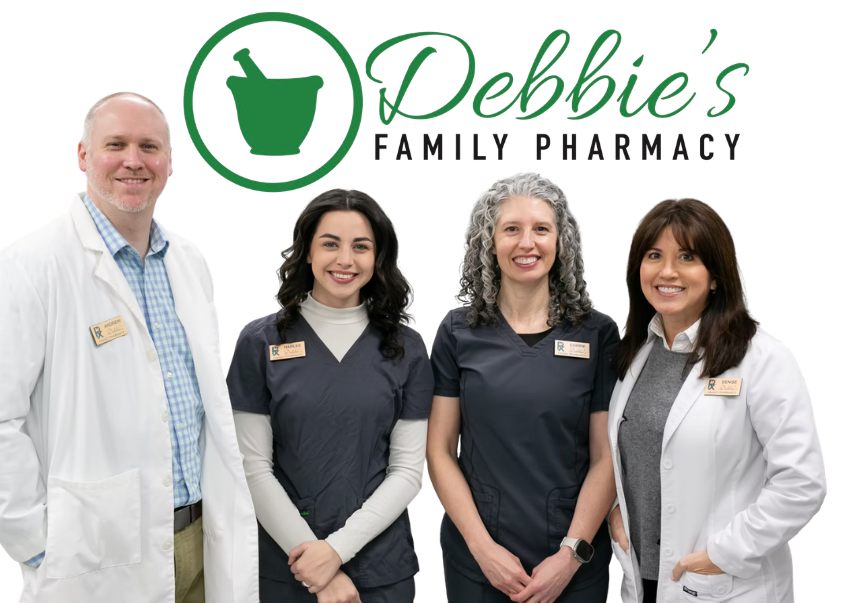
## [Customer Spotlight: Debbie's Family Pharmacy — From Falling Behind to Two Weeks Ahead](https://info.rxsafe.com/blog/customer-spotlight-debbies-family-pharmacy)
July 22, 2026
[](https://info.rxsafe.com/blog/customer-spotlight-debbies-family-pharmacy)
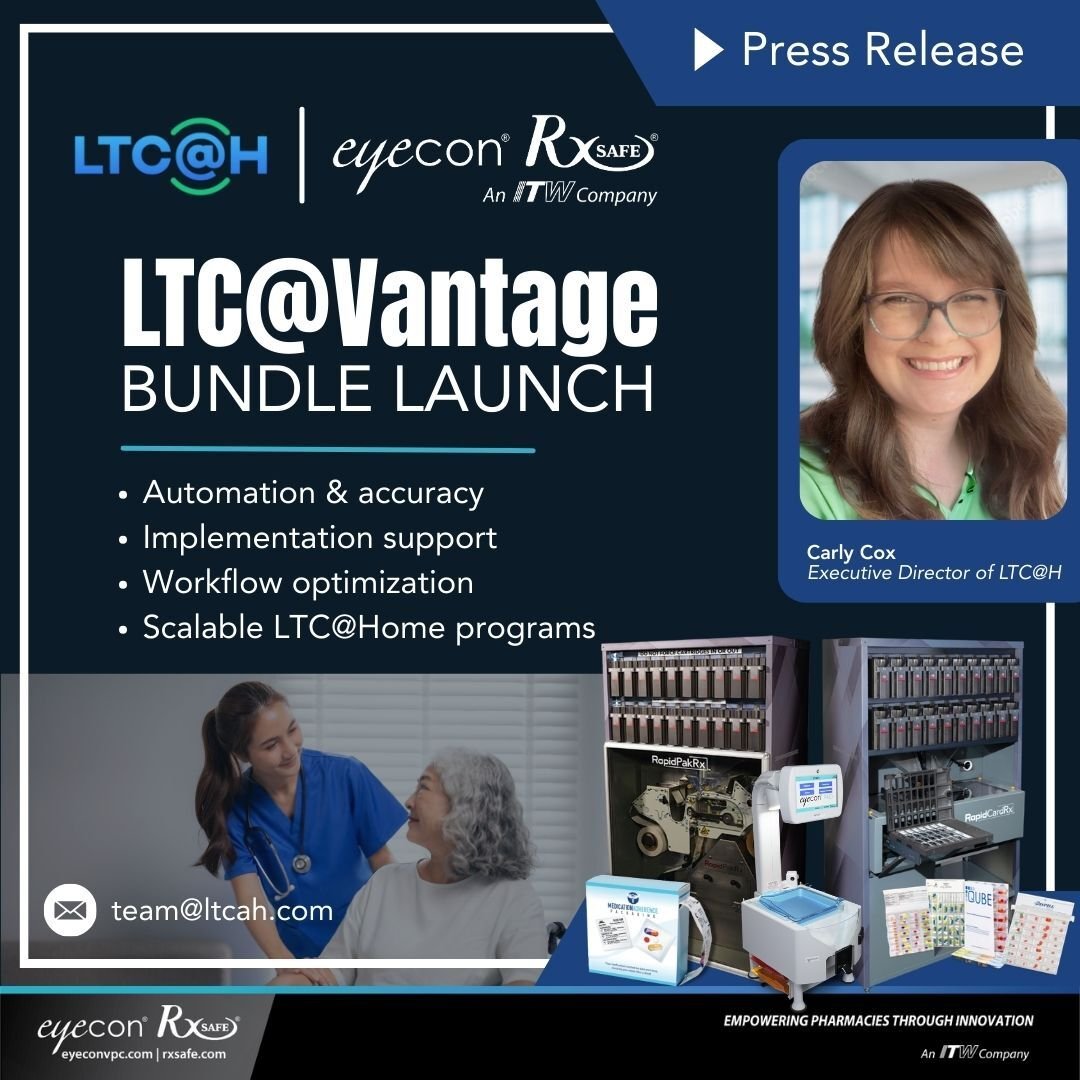
## [Eyecon | RxSafe and LTC@Home Pharmacy Network Strengthen Partnership with Launch of LTC@Vantage Bundle](https://info.rxsafe.com/blog/ltcvantage-bundle)
March 18, 2026
[](https://info.rxsafe.com/blog/ltcvantage-bundle)
[](https://rxsafe.com/contact/)
[](https://www.eyeconvpc.com/contact-the-eyecon-sales-team/)
### Most recent posts
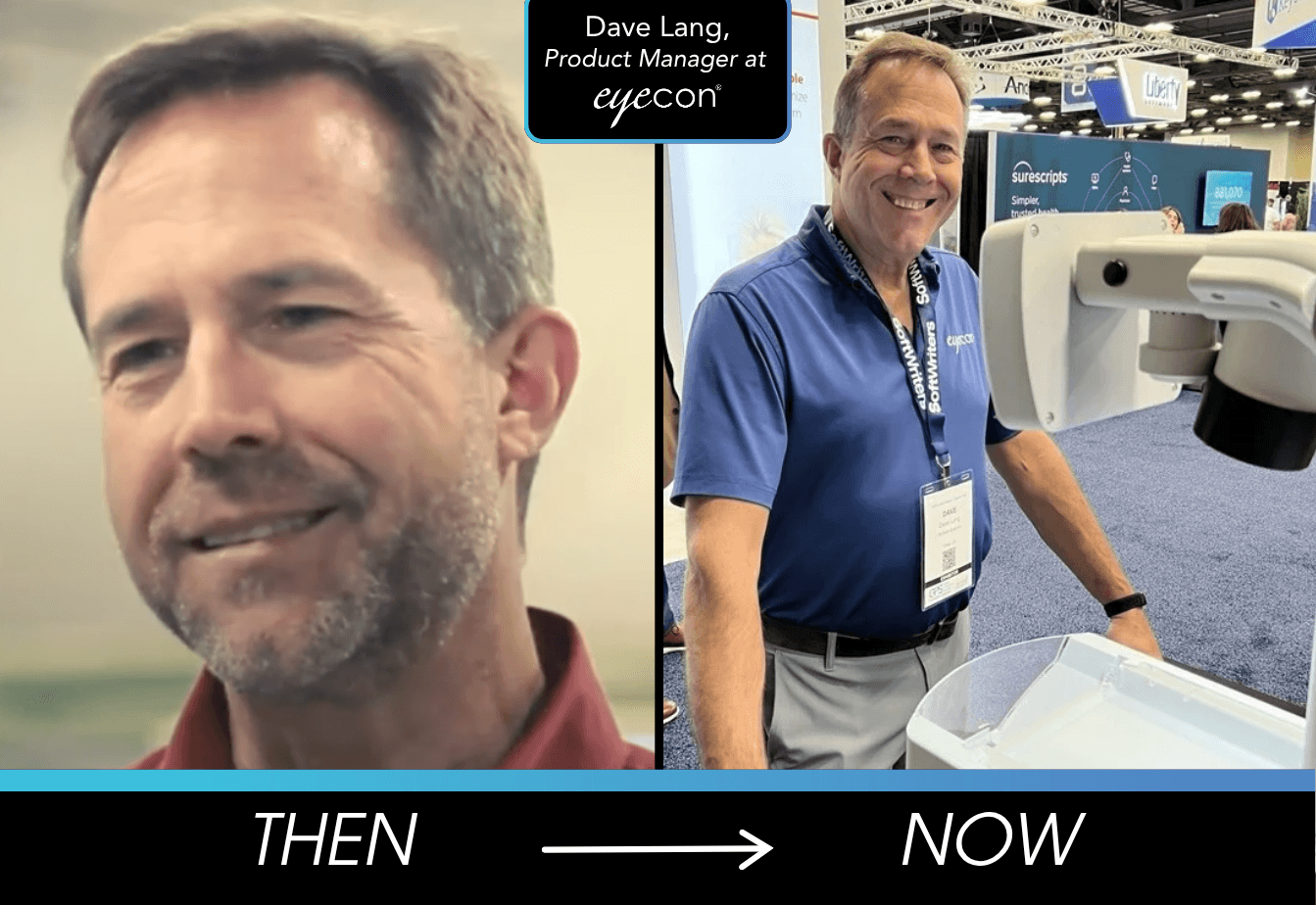
[Celebrating Dave Lang: 48 Years, One Remarkable Career](https://info.rxsafe.com/blog/celebrating-dave-lang)
[](https://info.rxsafe.com/blog/celebrating-dave-lang)
[Maximize Pharmacy Investment with Section 179 in 2026](https://info.rxsafe.com/blog/section-179-and-your-pharmacy)
[%20(1).png)](https://info.rxsafe.com/blog/section-179-and-your-pharmacy)
[Customer Spotlight: Debbie's Family Pharmacy — From Falling Behind to Two Weeks Ahead](https://info.rxsafe.com/blog/customer-spotlight-debbies-family-pharmacy)
[](https://info.rxsafe.com/blog/customer-spotlight-debbies-family-pharmacy)
#### CONTACT US
[2453 Cades Way, Ste. A Vista,CA 92081](https://goo.gl/maps/97fgzgqWD7UU2r7PA)
[tel:18777972411](tel:18777972411)
[MAIN: 866-338-1286](tel:8663381286)
[mailto:info@rxsafe.com](mailto:info@rxsafe.com)
[info@rxsafe.com](mailto:info@rxsafe.com)
#### SUPPORT
[tel:18777972411](tel:18777972411)
[SUPPORT: 877-797-2411](tel:18777972411)
[mailto:support@rxsafe.com](mailto:support@rxsafe.com)
[support@rxsafe.com](mailto:support@rxsafe.com)
[support.rxsafe.com](https://rxsafe.zendesk.com/hc/en-us/restricted?return_to=https%3A%2F%2Frxsafe.zendesk.com%2Fhc%2Fen-us)
[RxSafe University](https://www.rxsafeu.com/learn)
Facebook
LinkedIn
YouTube
Instagram
[](https://rxsafe.com/)
© 2026 RxSafe, LLC | All Rights Reserved.
- [Privacy policy](https://rxsafe.com/privacy-policy/)
- |
- [Term of Use](https://rxsafe.com/rxsafe-terms-of-use/)
Cookie Settings
```json
{
"@context" : "https://schema.org",
"@type" : "BlogPosting",
"author" : {
"@type" : "Person",
"name" : "RxSafe",
"url" : "https://info.rxsafe.com/blog/author/rxsafe"
},
"dateModified" : "2025-10-16T16:11:13.122Z",
"datePublished" : "2025-10-03T17:32:49.000Z",
"headline" : "LTC Pharmacy at Home: Redefining Independent Pharmacy Growth – Part 2 [Podcast Recap]",
"image" : [ "https://info.rxsafe.com/hubfs/Jennifer%20Whalen%2c%20Susan%20Rhodus%2c%20Cole%20Page%2c%20Michael%20Cator%20&%20Brian%20Glaves%20EP%2002%20-%20Building%20Your%20LTC%20Pharmacy%20at%20Home%20Business.png" ],
"mainEntityOfPage" : {
"@id" : "https://info.rxsafe.com/blog/building-your-ltc-pharmacy-at-home-business-part-2",
"@type" : "WebPage"
},
"publisher" : {
"@type" : "Organization",
"logo" : {
"@type" : "ImageObject",
"url" : "https://info.rxsafe.com/hubfs/eyecon-RxSafe-combo-logo-1.png"
},
"name" : "RxSafe, LLC"
}
}
```
```json
{
"@context" : "https://schema.org",
"@type" : "Corporation",
"alternateName" : "RxSafe",
"logo" : "https://rxsafe.com/wp-content/uploads/2017/05/rxsafe_logosmall.png",
"name" : "RxSafe, LLC",
"sameAs" : [ "https://www.facebook.com/RxSafe/", "https://twitter.com/RxSafe", "https://www.instagram.com/rxsafe/", "https://www.youtube.com/user/RxSafe", "https://www.linkedin.com/company/rxsafe-llc", "https://www.corporationwiki.com/California/San-Diego/rxsafe-llc/47365349.aspx" ],
"url" : "https://rxsafe.com"
}
```