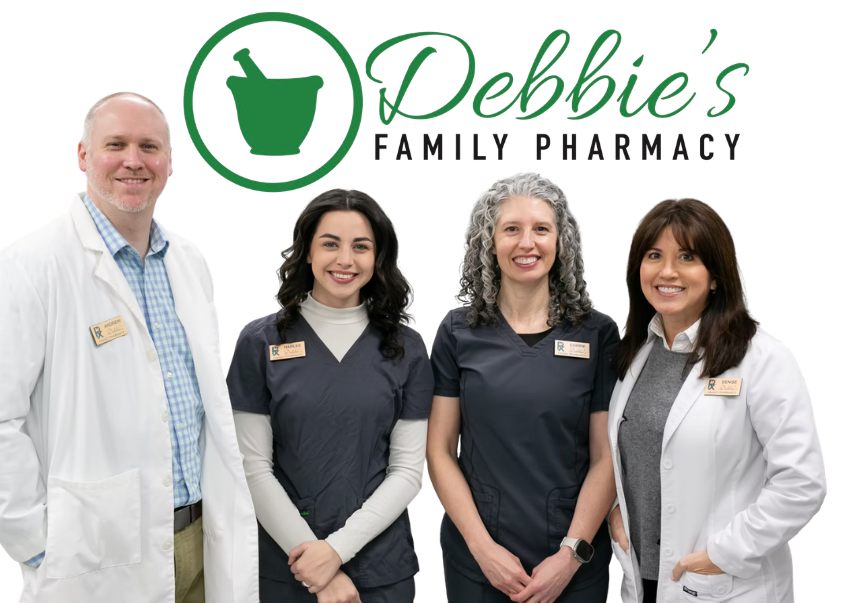


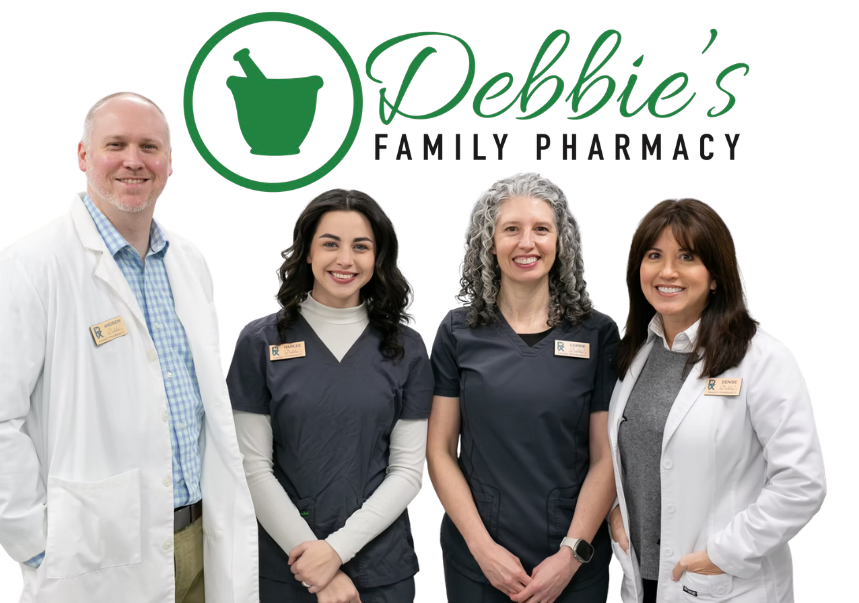
Andrew and Page Mize, owners of Debbie's Family Pharmacy in Rogers Arkansas, have been using their RapidPak for a little less than a year now. We checked in to learn how automation has changed their pharmacy business, what they've learned along the way, and what advice they have for other pharmacies considering adherence packaging. Along the way, they shared how the RapidPak has helped them grow their Long-Term Care at Home program while making daily operations more efficient.
Finding the Right Automation Solution
Their search for pharmacy automation began several years ago, after assisted living facilities they served started asking specifically for strip packaging.
To better understand how automation would fit into their workflow, they attended Cencora ThoughtSpot to evaluate their options.
"One of the things that attracted us to the RapidPak was the small physical footprint for our store. It's the size of a bookshelf." Andrew noted.
Unlike other systems they considered, the RapidPak didn't require costly renovations or additional floor space. After seeing the machine in action through a mentor's pharmacy and doing extensive research, Andrew said the decision became straightforward.
"At that point, it was kind of an easy decision for what our needs were."
Solving Their Biggest Workflow Bottleneck
Before automation, their LTC workflow relied heavily on manual packaging.
The process was time-consuming, as pharmacists often had to unpack cards again during final verification, and their LTC work was consistently falling behind.
Andrew explained that they reached a crossroads: hire additional staff or automate.
They chose to invest in the RapidPak, whose compact footprint allowed them to increase capacity without hiring additional staff, something that wasn't practical given their limited pharmacy space.
Today, the difference is dramatic.
Before automation, their LTC workflow was constantly playing catch-up. Recently, they found themselves two weeks ahead of schedule and actually had to slow down for the first time.
"One of the things that attracted us to the RapidPak was the small physical footprint for our store. It's the size of a bookshelf."
— Andrew Mize, Owner, Debbie's Family Pharmacy
Growing Their LTC at Home Program
One of the biggest impacts they've seen has been the growth of their LTC at Home services.
Since implementing the RapidPak, they've transitioned approximately 70 patients to adherence packaging through a gradual rollout that made adoption manageable for both staff and patients.
To identify new opportunities, they:
- Used the LTC at Home Attestation form to determine patient eligibility.
- Reviewed insurance plans that covered at-home services.
- Began proactively marketing the service to caregivers and patients who qualified.
They also found success by providing sample pouches and packaging during direct patient conversations, making it easier for people to understand the benefits before committing.
In addition, they've built relationships with home healthcare and caregiver organizations by providing brochures and sample packaging. While caregivers often cannot directly administer medications from prescription vials, they can provide patients with clearly labeled adherence pouches, making it easier for patients to take the right medication at the right time while staying within caregivers' scope of practice.
"If they can't directly help with medication, but there's a way that we can, we can bridge that gap."
He believes adherence packaging ultimately helps patients remain healthier and independent longer, as "the best medication in the world isn't going to do anything for you if you don't take it the right way."
.jpg?width=950&height=638&name=Pharmacy%20Photo%202025%20Cropped%20(1).jpg)
Winning New Business
The RapidPak has also opened doors that weren't previously available.
Before adding strip packaging, Debbie's Family Pharmacy lost the opportunity to serve patients at a facility that specifically required this type of adherence packaging.
Now, they've been able to reconnect with that facility and begun gaining patients because they can now offer the packaging those residents prefer.
As Andrew put it, "It just makes us a more well-rounded pharmacy."
Staff Adoption Was Easier Than Expected
Although introducing new technology can be intimidating, their team adapted quickly.
Once employees saw how much time the RapidPak saved, enthusiasm quickly replaced hesitation.
Training also proved straightforward. When they needed to train another technician after staffing changes, they relied on both hands-on instruction and RxSafe University, an online training resource included with every machine, to get staff up to speed efficiently. This platform offers short, easy-to-follow training modules that make it simple to learn new skills or refresh existing ones.
Lessons Learned Along the Way
Andrew and Page also shared a few practical tips for pharmacies considering automation.
- Roll patients over gradually. Introducing adherence packaging over time prevented staff from becoming overwhelmed.
- Use sample packaging during patient conversations. Letting patients handle the pouches and boxes made adoption easier.
- Adjust your workflow. Rather than packaging medications immediately, Debbie's Family Pharmacy stages prescriptions in advance and waits until closer to the delivery date to package them, making last-minute medication changes much easier to manage.
- Stay consistent with maintenance. Routine cleaning keeps the machine running reliably. Their team even uses a dry-erase calendar by the machine to stay on schedule.
Support When It Matters
Andrew and Page also praised the hands-on support they received after installation.
Rather than relying solely on phone calls or emails, the Support team connected with them over a quick video call to diagnose the issue and guide them through the solution step-by-step. This personalized approach made what could have been a lengthy interruption quick and easy to resolve.
Looking Ahead
Less than a year after implementing the RapidPak, Debbie's Family Pharmacy has streamlined workflows, expanded its LTC at Home program, won new business, and improved medication adherence for more patients—all without adding additional staff.
One thing they're still working on? Naming their RapidPak. As Andrew put it, "It's a super important decision because once you name it, you can't go back." Some pharmacy decisions such as these deserve a little extra deliberation. Needless to say, we'll be staying tuned for the final decision.
.png)
%20(1).png)
%20(1).png)